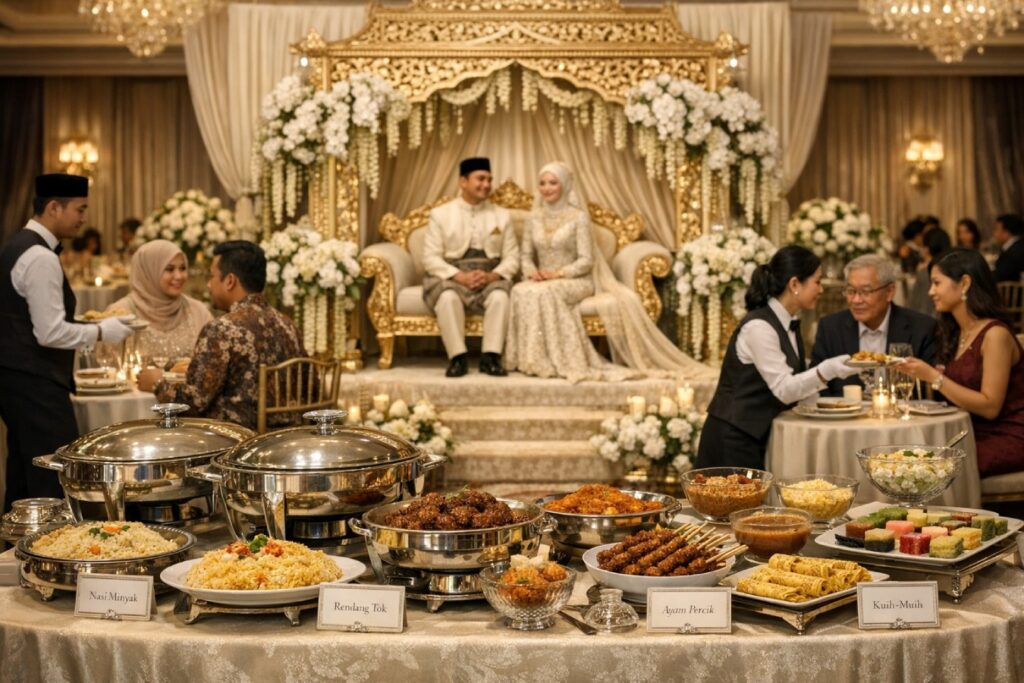
Indian weddings in Malaysia are among the most vibrant and culturally rich celebrations in the country. Yet they are also among the most frequently misunderstood—especially when it comes to catering. One of the most common mistakes is assuming that all Indian weddings follow the same structure. In reality, South Indian and North Indian weddings differ profoundly in ritual flow, menu design, service expectations, and what “good hosting” looks like to elders and family.
For distinguished families—where guest lists are large, reputational stakes are high, and cultural accuracy matters—understanding these differences is essential. The goal is not to “serve Indian food.” The goal is to serve the right food, in the right way, at the right time.
South Indian weddings: precision, purity, and sequence
South Indian weddings tend to be deeply ceremonial. Ritual accuracy is central, and the atmosphere often carries a sense of spiritual focus. Food, in this context, is not just celebratory—it is part of the ceremony.
Common characteristics include:
– Strong emphasis on vegetarian offerings or ritual‑specific dishes depending on family tradition
– Flavour profiles built around coconut, lentils, curry leaves, mustard seeds, ghee, tamarind, and pepper
– Structured dining sequences—what comes first, what follows, and how the meal is paced
– Service that prioritises respect for elders and correct order
Because the structure is precise, mistakes feel more than operational; they feel cultural. A menu that is too heavy, incorrectly sequenced, or inauthentic can create discomfort, especially among elders who are the cultural guardians of the wedding.
North Indian weddings: opulence, abundance, and theatre
North Indian weddings often lean toward grandeur and abundance. They are typically more visibly festive, with menus designed to feel generous and celebratory. Rich gravies, aromatic spices, and indulgent textures are common.
Common characteristics include:
– Slow‑cooked meats and richly spiced curries
– Cream‑based sauces, tandoori flavours, and bread pairings
– Wider variety across appetisers, mains, and desserts
– A dining experience that feels expansive, with guests sampling many items
Here, the expectation is not minimalism—it is generosity executed with sophistication. Under‑delivering variety or serving food that feels “light” can disappoint guests who associate abundance with hospitality.
Why the difference matters in Malaysia
Malaysia adds a unique layer of complexity. Indian weddings here often include multicultural guest lists: Malay friends and colleagues, Chinese relatives through intermarriage, and international guests. That means catering must balance authenticity with inclusivity and, frequently, halal requirements.
A capable Indian wedding caterer in Malaysia must therefore handle:
– Cultural correctness (South vs North; regional variations; family preferences)
– Halal integrity where required
– Spice calibration for diverse palates without flattening the cuisine
– Service professionalism suitable for high‑status guests and formal venues
In other words: it’s not just about food; it’s about fluency.
The hidden role of elders—and why “face” matters
In many Indian weddings, elders carry a significant influence over how the wedding is evaluated. They may not post online reviews, but they will remember whether the wedding respected tradition. If something feels culturally off, it can become a long‑lasting point of commentary within the family network.
Distinguished families understand this. They choose caterers who can translate tradition into an elevated experience without compromising authenticity.
Menu planning for high‑income Indian weddings
Premium Indian wedding catering is curated, not crowded. The best menus:
– Avoid redundancy (too many similar gravies; repeated spice profiles)
– Balance richness with lighter options so guests remain comfortable
– Provide vegetarian and non‑vegetarian options that feel equally prestigious
– Include familiar classics executed at a higher standard
– Ensure desserts are memorable and properly portioned
Portion planning also matters. Indian weddings often involve longer events, multiple ceremonies, and guests arriving in waves. A premium caterer plans replenishment and timing with discipline so the experience stays consistent throughout.
The Big Rajah advantage: cultural intelligence + global execution
The Big Rajah’s strength lies in combining cultural fluency with operational discipline. The team understands that Indian weddings are not “one category” and approaches menu design with specificity—South Indian traditions treated with respect, North Indian expectations delivered with elegance.
Beyond flavour, The Big Rajah’s experience with embassy functions, dignitaries, and protocol‑heavy events adds a layer of professionalism that high‑income families value:
– Calm service under pressure
– Discreet attention to VIPs and elders
– Consistent quality at scale
– Reliable timing aligned to ceremony flow
This is the difference between a caterer and a partner.
Choosing with confidence
Indian weddings are once‑in‑a‑lifetime milestones. There is little room for correction on the day itself. Families who host distinguished celebrations do not choose the longest menu or the cheapest package—they choose experience, discipline, and cultural intelligence.
Understanding South vs North Indian wedding differences is the first step. Choosing a caterer who can honour those differences with refinement is what makes the wedding feel seamless and truly elevated.
Contact The Big Rajah today to begin planning a wedding that combines timeless elegance, exquisite taste, and unforgettable memories.